Cross-Source Summaries
Why Summary Tools Matter, No Matter Where Information Comes From
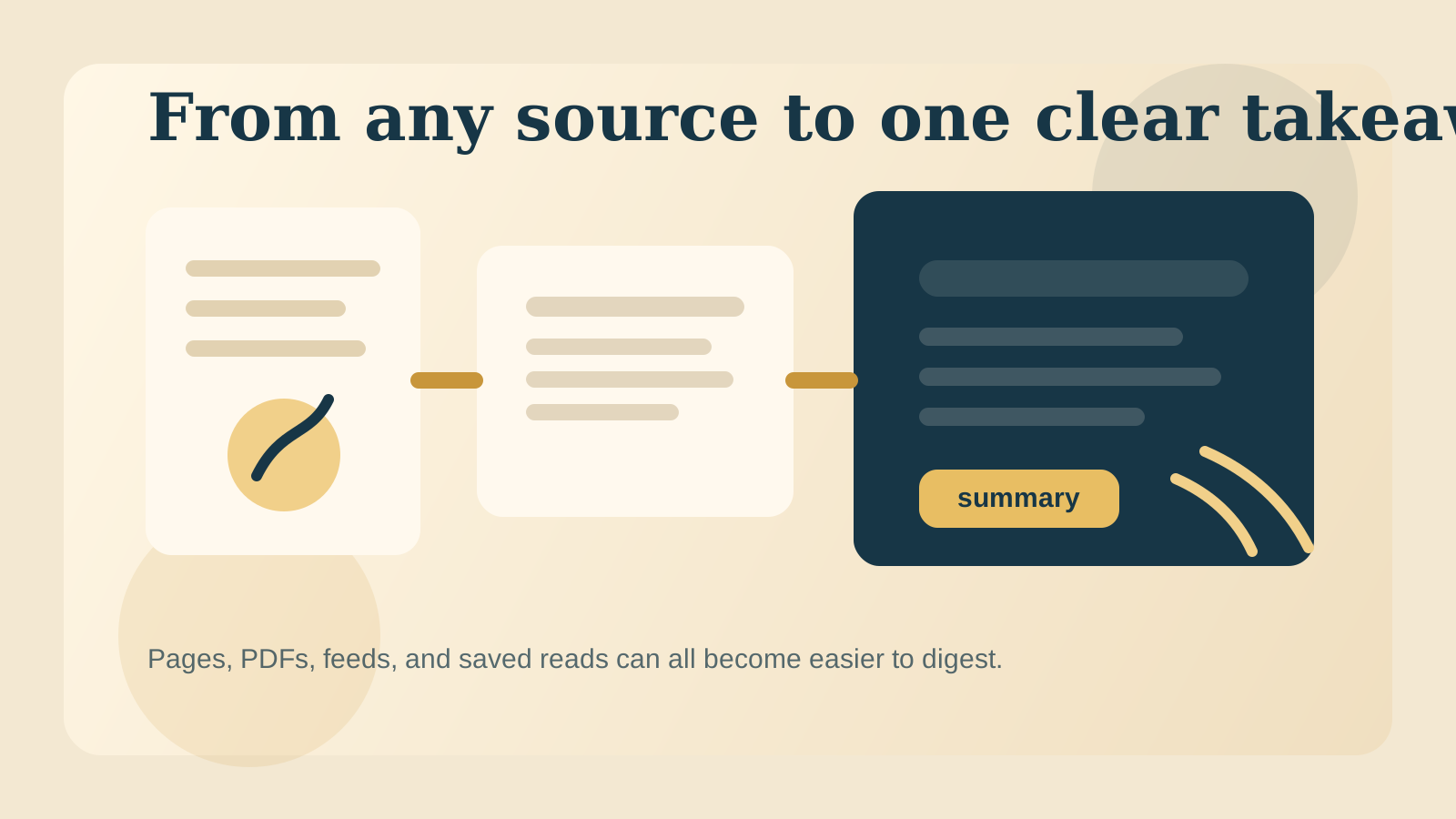
People do not learn from one source anymore. We learn from articles, documents, newsletters, browser tabs, transcripts, and feeds. The source changes, but the need stays the same: understand it quickly without losing the point.
The source should not decide whether you can understand it
Some of the most valuable information today is trapped inside inconvenient formats. A sharp essay may be buried behind a cluttered page. A useful report may be long and dense. A great idea may appear in a thread, a PDF, or a page you only have five minutes to process.
If understanding depends on perfect conditions, most information will stay half-read. Good tools remove that friction by meeting content where it already lives.
Summaries help preserve energy, not just time
People often describe summarization as a speed benefit, but the bigger benefit is cognitive. A strong summary lowers the effort required to enter a topic. It gives you the frame first, so your attention can go toward judgment instead of basic orientation.
That matters across every source type. Whether content starts as a webpage, an article, a long memo, or a saved read-later item, the job is the same: extract what matters and make it easier to carry forward.
The future of reading is assisted understanding
We will always need original sources. Summaries are not replacements for thinking. They are launch points for better thinking.
The best tools will help people digest information regardless of where it comes from, then make it available in the form that suits the moment, especially audio. That is how we keep up without giving up depth.
Sources
- Causes, consequences, and strategies to deal with information overload: A scoping review
Journal of Information Management / ScienceDirect
- A systematic review of automatic text summarization for biomedical literature and EHRs
Journal of the American Medical Informatics Association / PMC
- The effects of summarization and factual retrieval practice on text comprehension and text retention in elementary education
Journal of Experimental Psychology: Applied / PubMed
- What is content design?
GOV.UK Guidance